March 10th, 2022
What to expect when visiting our orthodontic office for your new patient consultation
When you come in for your complimentary consultation you will be greeted by our new patient and appointment coordinators. If you haven't already, you will be asked to fill out new patient forms: medical history, Hipaa and consent forms, as well as dental insurance information. Once you are finished with paperwork a certified assistant will introduce themselves and take you to our records room. During this time, the assistant will take two digital X-rays- a panoramic and cephalometric. After x-rays, digital photos of your mouth are taken, and we use our high-tech Itero Scanner to create a 3D model of your teeth. Dr. Azizi will then analyze all the records very carefully. He will then consult with the patient. Dr. Azizi will give the patient his professional opinion on what type of treatment is beneficial and what would work best for you.
Am I too old for Braces or Invisalign?
Many people believe there is an age limit to receiving orthodontic treatment. Good news! Your age should not deter you from getting the beautiful smile you have always wanted. Everyone deserves a perfect smile no matter how old they are! Dr. Azizi will be able to give you that confidence boost when you are ready.
How can you straighten your teeth?
Whether you are a teenager or adult you can straighten your teeth by using braces or invisalign! Yes, you read that right adult patients CAN get braces because again, orthodontics does not have an age limit! Some patients may think they will not be able to get treatment due to missing teeth or needing dental work completed, but that is not true. Dr. Azizi will still be able to give you the best treatment plan by communicating with your dentist while you are in orthodontic treatment.
What are your options for orthodontic treatment?
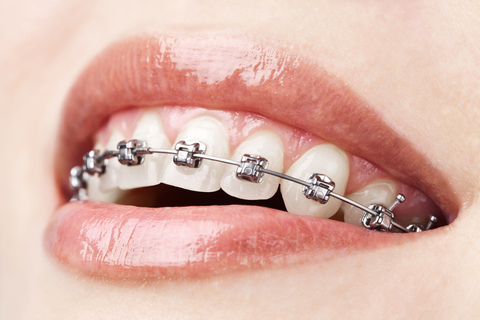
- Traditional metal braces- Metal braces are the most common type of braces. The braces are made out of stainless steel and will straighten your teeth using the brackets and archwires. You can add and change the colors to your metal braces every visit.
- Clear braces- Clear braces are a common choice for teens and adults who do not like invisalign. The clear braces are made out of ceramic brace with clear materials that do require more upkeep with your oral hygiene. They will straighten your teeth using the clear brackets and clear archwires.
- Invisalign- Invisalign is a series of invisible trays that are prescribed by Dr. Azizi to align your teeth and correct your bite. Patients choose invisalign due to cosmetic reasons and their lifestyle. Invisalign patients need to wear their clear aligners at least 22 hours a day.
With full cooperation of the patient and Dr. Azizi’s superb treatment plan you will achieve a perfect smile in no time!
Ready to schedule a consult?
Our office is eager to meet you and can't wait to discuss your orthodontic options! If you are ready to start your smile journey with Azizi Orthodontics, give us a call! We have two convenient locations: Glenside-(215) 576-6414 and Ambler-(215) 646-9514.
March 9th, 2022
As you are undergoing orthodontic treatment, our team at Azizi Orthodontics would like to point you to a helpful website. Our friends at the American Association of Orthodontists (AAO) have lots of important information about everything relating to braces, including myths and facts of orthodontics, tips for a better orthodontic experience, and cool webisodes about orthodontics.
Check out AAO today and feel free to contact us at our Ambler or Glenside office if you have any questions.
Dr. Benjamin Azizi and our team at Azizi Orthodontics hope this information helps you!
March 2nd, 2022

Parents usually have numerous questions about orthodontic treatment for their children. According to the American Association of Orthodontists, orthodontic treatment for children should start at around seven years of age. This allows Dr. Benjamin Azizi to evaluate the child’s existing and incoming teeth to determine whether or not early treatment might be necessary.
What is early orthodontic treatment?
Early orthodontic treatment, known as Phase One, usually begins when the child is eight or nine years old. The goal is to correct bite problems such as an underbite as well as guide the jaw’s growth pattern. It also helps to make room in the mouth for the permanent teeth to be properly placed as they come in. This will greatly reduce the risk of the child needing extractions later in life due to his or her teeth getting crowded.
Does your child need early orthodontic treatment?
There are several ways that you can determine whether your child needs early treatment. If you observe any of these characteristics or behaviors, you should talk to Dr. Benjamin Azizi.
- Early loss of baby teeth (before age five)
- Late loss of baby teeth (after age five or six)
- The child’s teeth do not meet properly or at all
- The child is a mouth breather
- Front teeth are crowded (you won’t see this until the child is about seven or eight)
- Protruding teeth, typically in the front
- Biting or chewing difficulties
- A speech impediment
- The child’s jaw shifts when he or she opens or closes the mouth
- The child is older than five years and still sucks a thumb
What are the benefits of seeking orthodontic treatment early?
Early orthodontic treatment is begun while the child’s jaw bones are still soft. They do not harden until the children reach their late teens. Because the bones are still pliable, corrective procedures such as braces work faster than they do for adults.
In short, early treatment at our Ambler or Glenside office often allows your child to avoid lengthy procedures, extraction, and surgery in adulthood. Early treatment is an effective preventive measure that lays the foundation for a healthy, stable mouth in adulthood.
February 23rd, 2022

Wearing braces limits some of the snacks you can eat. However, you still have plenty of choices for fun and healthy foods that will not harm your braces. You can even enjoy a few crunchy treats as long as you choose them carefully.
Sweet Treats
Puddings provide a sweet and safe snack while you are wearing braces. You can even select flavored puddings such as caramel to satisfy the urge for items you should not eat. They can be purchased already made or whipped up at home. You can even select low-sugar varieties that still taste good. Ice cream and yogurt are also choices; just avoid products with nuts.
Healthy Snacks
Fruits are excellent for a healthy snack. You just need to avoid biting into hard fruits such as whole apples. You can avoid the problem with fruit cocktails packed in water. Cocktails still have the nutritional benefits and flavor, but contain softer pieces. Avoid fruits packed in heavy syrup, though; these tend to have too much sugar.
Crunchy or Salty Snacks
Not all crunchy foods are bad; you just need to limit the crunch. Walnuts are a softer nut that can normally be eaten safely. Small cheese crackers satisfy the need for crunchy and salty. You can also allow pieces to dissolve slightly in your mouth before chewing, to reduce any risk.
Soft granola bars are also an option. Check the granola ingredients to ensure there are no large nut pieces, and brush your teeth afterwards. Otherwise pieces can become stuck in your dental work.
If you have any questions about safe snacks, do not hesitate to ask Dr. Benjamin Azizi and our staff.